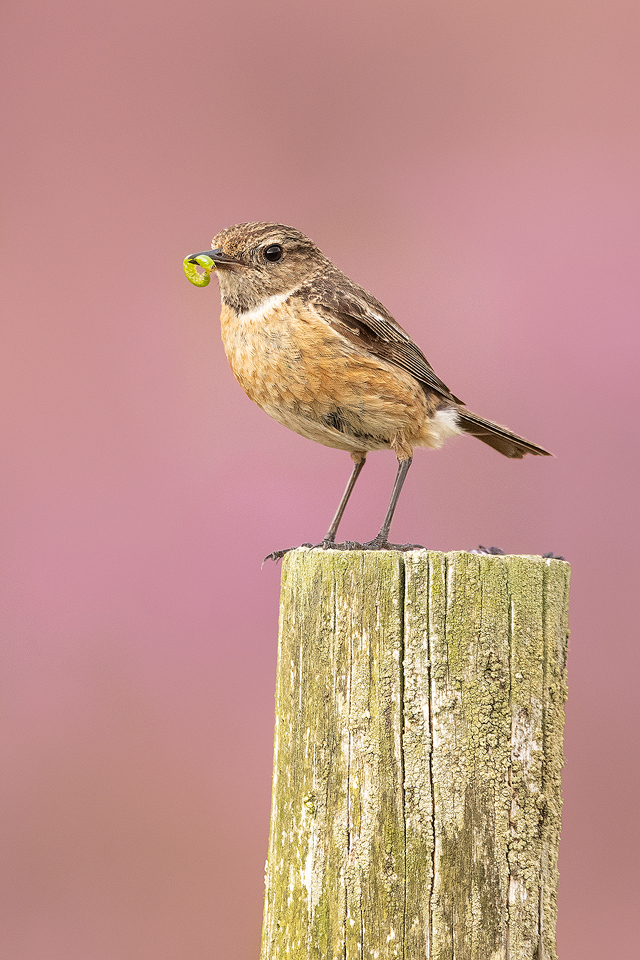
Stonechat with caterpillar II
A young stonechat poses on a lichen covered post with a bright green caterpillar, the purple background is flowering heather in the Peak District.
About the Stonechat
The stonechat (Saxicola rubicola) is a lively little bird that brightens up the UK’s heathlands and coastlines. You’ll often spot one perched on gorse or fence posts, flicking its tail and calling out with a sharp “tack-tack” sound — like two stones being hit together.
Male stonechats are easy to recognise with their black heads, white collars, and warm orange chests. Females are softer in colour, with brown heads and lighter markings, but share the same upright, alert posture. Both are about the size of a robin and full of energy.
Habitat
Stonechats love open landscapes like heathland, moorland, and coastal scrub. They’re common in the south and west of the UK but are spreading further north. In winter, they move to milder coastal areas where insects are still around.
These birds mainly feed on insects and spiders, catching them in quick flights from low perches. In colder months, they’ll also eat seeds and berries to keep their energy up.
Conservation and Threats
Stonechats are doing well in the UK and are listed as a Green species, meaning they’re not currently at risk. However, they still rely on healthy heathlands and scrubby habitats, which need careful management to prevent overgrowth or development.
Stonechats are a great sign of a healthy landscape. Their presence shows that open, insect-rich habitats are thriving. Plus, they’re simply a joy to watch — small, bold, and full of character.
You can find more about stonechats here