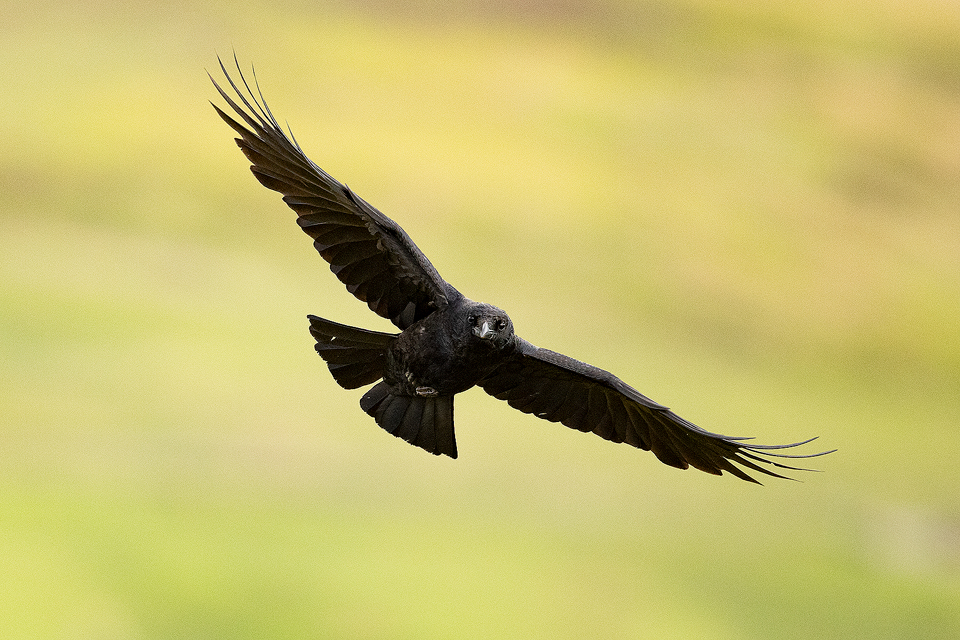
Carrion Crow in flight II
Carrion Crow in flight II. Carrion crow photographed mid flight against a moorland backdrop. Derbyshire, Peak District National Park.
About Carrion Crows:
The carrion crow (Corvus corone) is one of the UK’s most adaptable and intelligent bird species. Found across Britain and Ireland, these glossy black corvids thrive in both rural and urban environments, from farmland and woodlands to city parks and coastal cliffs.
Identification and Appearance
Carrion crows are medium-sized birds, measuring around 45 cm in length with a wingspan of up to 100 cm. Their plumage is entirely black with a subtle green or purple sheen, and they are often mistaken for rooks. Unlike rooks, however, carrion crows have feathered faces and thicker bills.
Behaviour and Diet
Highly intelligent and resourceful, carrion crows are known for problem-solving and even using tools. Their diet is extremely varied; they eat insects, small mammals, fruit, eggs, and roadkill. As scavengers, they play a vital role in cleaning up carrion and waste, contributing to a balanced ecosystem.
Breeding and Lifespan
Carrion crows usually mate for life, forming strong pair bonds. They build large stick nests high in trees or on cliffs, where the female lays 3–5 eggs in spring. The species can live up to 20 years in the wild.
Population and Conservation Status
The UK population is stable, estimated at around 1 million breeding pairs according to the British Trust for Ornithology (BTO). Classified as a Green-listed species under the UK Birds of Conservation Concern, the carrion crow is not currently threatened.
Fun Fact
Carrion crows can recognize human faces and remember individuals who have treated them well or badly. Studies show they can communicate warnings and even teach others about potential threats.
Find more about them here.